
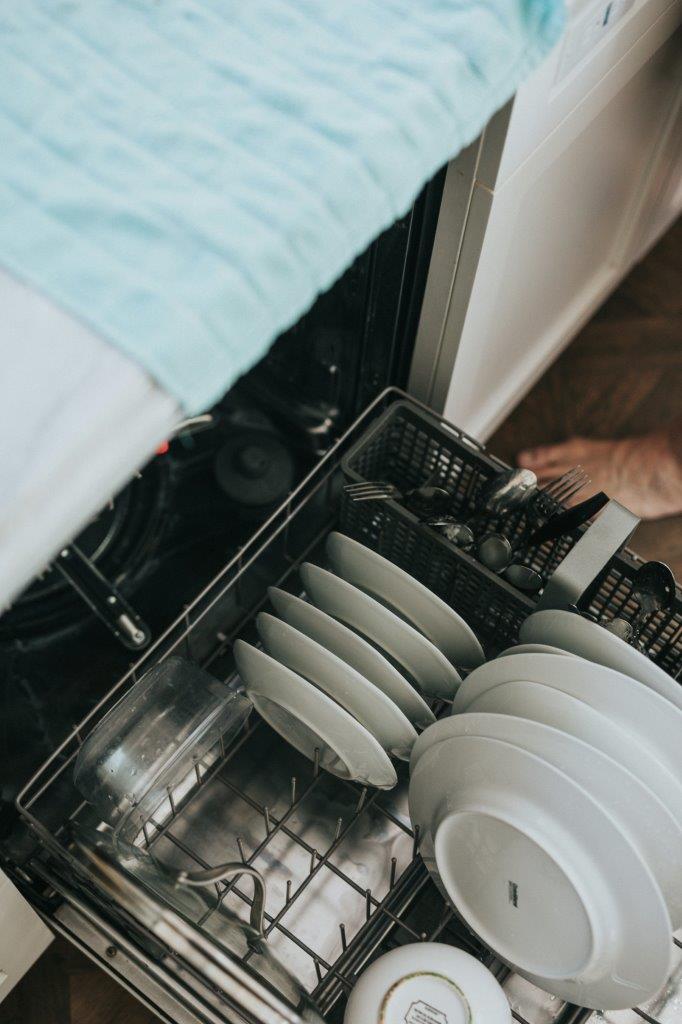
Photo by Nathan Dumlao on Unsplash
Dishwasher: Best Practices, Related Products and Brands in Germany
A dishwasher is a very handy and useful tool, especially when there are more family members and home-cooked meals are the norm. When all meals are cooked, there is no doubt that many dishes, including pots, pans, cups, plates, etc., get used and need immediate washing to be used again for the next meal.
A dishwasher unit installed in your kitchen is a blessing and saves time and effort. However, you must consider a few things to get the most from your dishwasher. So, today, on popular demand, I am writing an article about dishwasher usage and the best practices associated with it.
I come from India. In India, until the COVID-19 pandemic, dishwashers were not a very commonly used kitchen appliance in urban homes (at least not as common as washing machines and water purifiers). Maids and house help would come home daily and do the dishes, and a major task would be taken care of. Come COVID-19, and all services stopped. People had to start doing all their chores, including washing dishes. During this time, many households decided to get a dishwasher.
I moved to Germany just before the COVID-19 pandemic. Until then, I lived in India, and my kitchen didn’t have a dishwasher. When I moved to Germany, I found that a dishwasher in the kitchen is quite common, and only some rare kitchens don’t have a dishwasher. It made sense, too, because in Germany, one has to manage everyday household work on one’s own and regular house help is not available.
Using a dishwasher was a big change for me, and I started using it based on what I learned from friends and neighbours. With continuous usage, I realized that although I was using the dishwasher daily, I was certainly not doing some things right. This understanding came after I read in detail about dishwashers and their functioning.
So, today’s article is completely based on what I have learned, and I would like to share it with everyone new to using dishwashers. It would also be helpful for those who have used dishwashers but are just about starting to explore modern dishwashers.
I have covered the following topics in my article:
So, let’s start.
Which is better? Washing by hand or using a dishwasher?
This can be answered by asking yourself the following questions:
- How much do you cook?
If you are a family with kids, you will surely have loads of cooking in your kitchen. In addition, there might be an umpteenth number of bowls, glasses, and cutlery used for snacks, fruits, etc., thrown into the sink the entire day, meaning you have loads of dishes to wash all day. So, for you, the answer is yes, you do need a dishwasher. It will save you time, which you can use for more meaningful work.
If you are a single person who hardly cooks at home and doesn’t even have one whole load of dishwasher to run in a day, washing dishes with your hands is a better idea. That way, you will save on energy bills and use your resources more wisely. - Do you have enough kitchen space?
Here, I am not talking about space to install a dishwasher. I am talking about counter space. If you wash dishes with your hands, you will need to transfer them to a basket for drying before the dishes go to the shelves. If you have limited kitchen counter space, a dishwasher works better. In the dishwasher, dishes get rinsed, washed, and dried. Once the cycle ends, you can unload the dishwasher and transfer the dishes to the shelves. This way, you keep your sink and counter space free for other works. - Is Water conservation on your mind?
Many think dishwashers use more water to wash the same number of dishes than what is required to wash them with hands. This is not true. Modern dishwashers are designed to use water effectively and are optimised to conserve water and energy. On the other hand, when you wash hands, the water and soap usage is left to the individual and hence not optimised. Contrary to popular belief, there is a lot more water wastage when washing with hands compared to using a dishwasher. - Do you have hard water in your kitchen?
Hard water makes it difficult to clean dishes because the minerals in hard water interact with the surfactants in soap. Together these minerals and surfactants clump up, creating soap scum. The dishes don’t get adequately cleaned when the lather doesn’t get formed. The dishwasher’s hardness settings can be adjusted to the water type in your area, which helps you get a better wash with the dishwasher than with your hands using regular hard water. (An alternative is to install a water softener in your home. That way, even when you wash dishes with your hands, you can use soft water.)
With these questions answered, the next question that comes to mind is how to use the dishwasher to get the best results.
Dishwasher: Best Practices
Check the hardware settings of your dishwasher before using it.
It is important to adjust the water hardness settings for the water type in their area. Water hardness affects the dishwasher’s performance, and it should be adjusted to improve it.
Load the dishwasher properly (place the dishes correctly), and do not overload the dishwasher.
To understand how to load your dishwasher properly, one must understand how a dishwasher works.
When you turn on the dishwasher, water enters the dishwasher through a pipe and collects at the base. This water gets heated through a heating coil. Then, the soap compartment opens, and the soap dissolves in the hot water. Then, this soap water gets sprayed on the dishes through jets. The blade at the bottom turns around and throws water jets, ensuring all the dishes are washed. Then, all the dirty water is discarded, and freshwater enters the dishwasher. This rinses the dishes. Steam is generated after this water is discarded, giving the dishes a final cleanup and drying.
You must load the dishwasher in such a way that water reaches the dish easily. Since the sprayer arm is located in the middle of the appliance, dishes must face inwards and towards the centre.
If you load one dish on top of the other or overload the dishwasher, the jet of water will not reach some of the dishes, leaving them uncleaned at the end of the wash cycle.
Don’t rinse dishes before loading them.
This is a common contention between family members and sometimes even a reason for arguments. While one may think that rinsing and loading is the best practice, the other may oppose it. The truth is that rinsing the dishes before loading them is not a good idea. The reasons are as follows:
1. Most modern dishwashers have a turbidity sensor or probe device. These sensors use a beam of light to measure the number of dirt particles in the water and adjust the wash cycle accordingly. Pre-rinsing can trick the machine into believing that the dishes are clean and it will end the cycle before the unseen germs have been dealt with.
2. The enzymes in soaps are designed to attract themselves to dirt particles and be rinsed away. However, if dishes are already rinsed, the enzymes in the soap have nothing to attach to. Therefore, they don’t do the job that they are meant to.
Having said that, rinsing the dishes before loading them may be a good idea if:
1. You are using an old dishwasher which doesn’t have a sensor to detect the amount of dirt and adjust the wash programme accordingly.
2. If you don’t generate enough dishes to run the dishwasher frequently, for example, if you leave soiled dishes in the dishwasher overnight (because it is not full) and plan to turn it on the following day after adding a few more dishes, the food particles may start sticking to your dishes. Rinsing the hardened food stains and letting the dishwasher sort the rest on its own may be a good idea.
Discard the food waste before loading the dishes into the dishwasher.
Discard any food particles stuck to the dishes before loading them in the dishwasher. Although dishwashers are designed in a way that food waste left on the crockery is broken down and deposited in the filters ( due to water pressure and the chemical action of the soap), it can so happen that sometimes solid food waste (if it is too big to be broken) is blown around by the force of the multi water jets from the spray arms and gets deposited where ever the water jet last leaves them. Not only does it give you some dishes that are not so clean, it also creates bad odour. If not unloaded immediately, the food can decay and be a health hazard.
Understand the right products for the care and maintenance of the dishes and the dishwasher.
This includes using a good-quality dishwasher soap. If the water is hard, you will need to use dishwasher salt from time to time. Your dishwasher will also need regular cleaning, which can be done easily using a dishwasher cleaning liquid. And there are some more. The next section discusses some of the most commonly used products.
Now, let’s have a look at various dishwasher related products that are available in shops and supermarkets in Germany and their uses.
Dishwasher Products available in supermarkets and shops in Germany
Please note that the pictures used below are just for reference. These are not product recommendations. Many products are available on the market, and you can choose from them based on your needs and budget.
Dishwasher Soap (Called Geschirrspülmittel in German)

This is the main cleaning agent which will wash the dishes. Dishwasher soap comes in the form of a small bar or gel in a dissolvable pack or liquid. These are called Tabs. They have to be put in the soap compartment of the dishwasher every time you load it and turn it on for washing.
If you have a load of glass dishes and cutlery, you can add Rinse Aid ( Klarspüler in German) in addition to the dishwasher soap. This liquid improves the drying of dishes and prevents water stains on glasses and cutlery.

Dishwasher Salt (Called Spezial Salz in German)

Dishwasher salt is a must-have in your kitchen if you use your dishwasher regularly. It does many jobs. For example, it enables the proper functioning of the dishwasher’s water softening system, prevents limescale build-up on utensils, unclogs the pipes, enables good water flow in and out of the dishwasher, ensures that the dishwasher cleans the dishes well, and protects the machine from damage.
Many dishwashers have an indicator light that indicates if salt needs to be added. Alternatively, if you use the dishwasher regularly (2-3 times a day), adding salt once a week is a good idea.
Decalcifier (called Machinen Entkalker in German)

If, despite regularly using dishwasher salt, you see that the cleaning quality of the dishwasher is not good, one of the main causes can be limescale deposits that build up inside the dishwasher. These deposits can cause a number of problems that can affect the performance of your dishwasher. Use a decalcifier to remove these deposits. It comes in the form of powder, which has to be strewed into an empty dishwasher. Then, you must turn it on. See the instructions on the pack about its usage.
Dishwasher Cleaner (called Machinen Tiefreiniger in German)

When we use the dishwasher regularly, over time, not only limestone deposits but also grease and dirt deposits form in the nooks and crannies of the dishwasher, including the spray arms, filters and pipes, at least once every 3 months; the dishwasher must be thoroughly cleaned from the inside. It comes as a liquid cleaning agent in a small plastic bottle, which has to be opened, inverted and placed in the dishwasher. Then, run the cycle at least 65deg C. Read the exact usage instructions on the package.
Best Dishwasher Brands in Germany
In terms of quality, feature/functionality, good customer service and availability of spare parts, the two best brands available in Germany are Miele and Bosch. Choose one of these if you are building a new kitchen and want a reliable product that will last years. Of course, there are many other brands, like LG, Zanussi, etc, available in the market, and they are good too, but Miele and Bosch are the best ones in the market.
2 responses to “Dishwasher: Best Practices, Related Products and Brands in Germany”
-
Really enjoyed your post! You’ve given a thorough breakdown of dishwasher best practices in Germany—especially the bit about adjusting water hardness and using the right maintenance products. Your insight adds a lot of value for someone looking to improve dishwashing results. Thanks!
-
I’m glad you found the article useful 🙂
-


Leave a Reply