
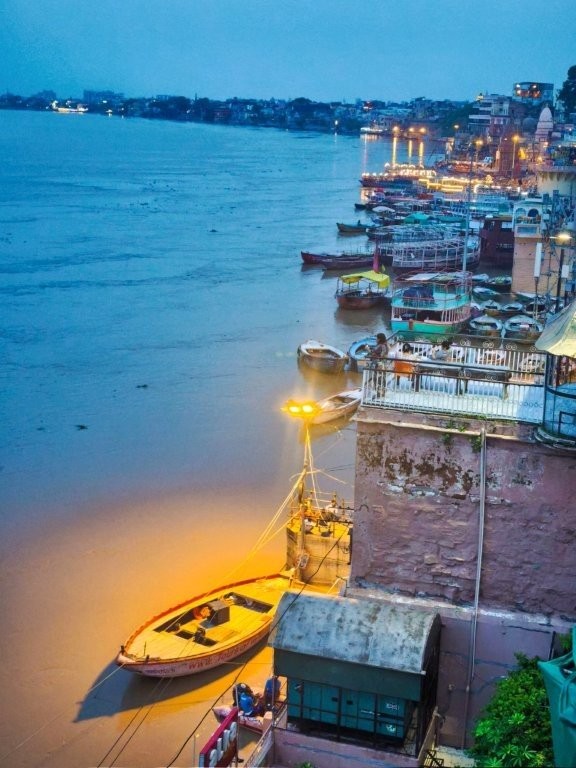
A Day in Varanasi, Uttar Pradesh, India
Varanasi, or Benaras, is said to be one of the oldest inhabited cities in the world. Located in the populous state of Uttar Pradesh in India, this city, erstwhile known as Kashi, is known for traditions of pilgrimage, death, and mourning in the Hindu culture.

Varanasi is located on the left bank of the river Ganga. It derives its name from Varuna and Assi, the two tributaries of the river Ganga, which, in a way, define the boundaries of this ancient city.
Recently, during our yearly visit to India, we did a short, but quite hectic 4-Day holiday, in which we visited four cities: Varanasi, Ayodhya, Lucknow and Agra. Although we visited these four cities in just four days, I wouldn’t recommend such a hectic itinerary. I have shared all my learnings and experiences in all my posts, which will help you plan your visit more effectively.
So, let’s start.
Arriving at Varanasi
You can arrive at Varanasi either by road, train or air. The road and train connectivity are pretty good. The train station is just 7 km from the riverside, which is also the old city area with all the temples and ghats and which you would want to visit as a tourist.
We took a flight and arrived at Varanasi airport. The airport is just 30 km from the old city.
After we alighted, we took a prepaid taxi ( from the counter right outside the airport, near the arrival gate), which dropped us off at a point about 2 km from the ghat area. Taxis are usually not allowed beyond that point, but people can take autos and cycle rickshaws. Since we had booked an accommodation near the ghats (about which I have written in the next section), we alighted at the taxi drop-off point, took a rickshaw, and reached a point about 1 km from the ghats. From there, we had to take our luggage and walk to our hotel.

My tip: If you plan to stay at a hotel near the ghats (which I recommend, as you’ll spend most of your time there as a tourist), consider carrying suitcases with wheels for easy transportation of your belongings. Also, try to travel as light as possible because the streets are narrow and oftentimes not clean, so lugging your baggage can be a challenge.
If you wish, you can also book a day trip from Delhi, which includes a Flight ticket with a visit to prominent places in Varanasi and Sarnath.
Accommodation in Varanasi
You can choose to stay in the old city area (which has most of the places to visit) or far from it. We chose to stay in the old city, in a hotel near the ghat, which made it easy for us to explore the area. As a tourist, if you stay in the old city, you also avoid the everyday hassle of taking transport to the old town.
Here is the link to the hotel where we stayed. My review of the hotel is posted here.
Here are some more pictures of the hotel and views from the hotel:


Note that the entire ghat area is a pedestrian zone. Only people who live there or own businesses in that area are allowed to use their vehicles. For all other people, autos and cycle rickshaws are available at reasonable prices, and if you have mobility issues, you can use them for moving around in the area.
Our Itinerary in Varanasi
We took a morning flight from Bangalore and reached Varanasi by afternoon. After checking into our hotel, we had lunch and spent the rest of the day exploring all the ghats.
The next morning, we started our day with early morning darshan at Sri Kashi Vishwanath temple, after which we explored some more ghats. Then, we left for Sarnath, where, after lunch, we visited the Archaeological Museum, which exhibits the Buddhist Cultural wealth recovered from the site of Lord Buddha’s first sermon at the Deer Park, Mrigadava in Sarnath.
After the visit, we headed for our next destination, Ayodhya.
If you wish to do this trip with a local guide, you can book a Full Day City Highlights Day Tour & Ganges Cruise.
In the following section, I shall take you through these experiences.
Experiences in Varanasi
1. Ghats (the broad steps that lead to the river) and Boat Ride on the Ganga River
Walking along the ghats and a boat ride on the river are the most unique experiences in Varanasi. Along the ghats, you can take a walk and check out the area around the ghat, visit the temples, witness the morning and evening Aarti or even take a dip in the holy waters of the Ganga river. The ghats are all connected, so walking along the ghats, checking out one after the other, is an experience you don’t want to miss in Varanasi.

Varanasi is said to have 84 ghats in all, with some of the prominent ones being the Dashashwamesh Ghat (the ghat closest to Kashi Vishwanath temple and most popular for its evening Aarti), the Panchganga Ghat (where most people take a dip in the holy waters), the Manikarnika Ghat and the Harishchandra Ghat (where Hindus cremate their dead), Assi Ghat (the biggest abd most popular ghat for its evening aarti. You can also take a boat ride on the Ganga River from here) and Namo Ghat (the most newly developed ghat, with its inauguration done in 2018).

As mentioned before, there are many more ghats that one can visit, but these are some of the most prominent ones.
Here are some more pictures of the ghats and the temples around the area:


My tip: Avoid visiting Varanasi between May and October, as you’ll miss the Ghat experience. During these months, the river gets flooded, and the ghats are closed.
Our Experience: We completely missed the Ghat experience because we visited Varanasi in July. However, we were able to explore some of the temples in the vicinity. The highlight was the Durlabh Darshan, which was a VR experience of darshan at the Kashi Vishawanath temple (near Manikarnika Ghat).
2. Temples
There are temples in every nook and corner of the city, with the most prominent ones being the Sri Kashi Vishwanath temple (dedicated to Lord Shiva), Sankat Mochan Temple (dedicated to lord Hanuman) and Durga Temple (dedicated to Maa Durga).
Sri Kashi Vishwanath Temple is the most visited temple in Varanasi. It is a Shiva temple and is one of the 12 Jyotirlinga shrines ( The Jyotirlinga shrines are the temples where Lord Shiva is believed to have appeared as a fiery column of light), hence a prominent Hindu pilgrimage site.
The original temple, called the Adi Vishweshweshwar temple, was destroyed by the Mughal king Mohammed Ghor during the invasion of India in the 12th century. Then, in the 16th century, under the reign of Akbar, the temple was rebuilt. But again in the 17th century, under the then kind Aurangzeb, the temple was destroyed and the Gyanvapi mosque was constructed on the site. It is said that despite the destruction, pilgrims continued to visit the remnants of the temple. Finally, in the 18th century, Ahilyabai Holkar, the Maratha ruler from Indore, got the temple reconstructed on the side adjacent to the mosque. The golden plating on the domes was donated by Maharaja Ranjeet Singh from Punjab.

My tip: As a prominent temple, it is the most visited one. If you are short of time or don’t want to waste time standing in long queues, it is best to book Sugam Darshan tickets on the official website of Sri Kashi Vishwanath Temple.
Our Experience: We booked the tickets in advance, so it took less than 30 minutes to do the darshan. The temple is clean and the darshan is well organised with plenty of people appointed to help and direct the pilgrims. Inside the temple, photography and videography are not allowed. After the darshan, we sat at the temple premises for some time and then visited the other small temples inside the temple complex and the Gyanvapi well. We only visited the Kashi Vishwanath temple and skipped the others.


3. Alamgir Mosque
Alamgir Mosque, also known as Aurangzeb’s Mosque, is a 17th-century mosque on the Panchganga Ghat in Varanasi. Alamgir was the honorific title given to Aurangzeb after he became the emperor of India, which explains the name of the mosque. The mosque can be visited any day of the year. The interior of the mosque is relatively plain, featuring simple geometric and floral designs painted on the ceiling.


My tip: Even if the mosque is closed, you can walk in. The caretaker opens the gate and shows the mosque if you pay him a small fee.
Our experience: We visited the mosque, checked out its interiors, and also got a lovely view of the river from its terrace.
4. Food
Varanasi is known for its street food. Popular foods like samosa, kachori, malaiyo, lassi, etc, are available at many places, so find a spot that looks clean and hygienic and treat yourself to the delicious treats. Also, since people from all parts of India, as well as other parts of the world, visit Varanasi, you can easily find other cuisines in hotels and restaurants.

Our Experience: Since we visited Varanasi during the monsoon season, we were a bit scared to try the street food, due to hygiene reasons. We mostly ate at the restaurant attached to our hotel and had a wonderful experience.
My recommended itinerary for your Varanasi Visit.
Keep at least two days for your Varanasi Visit. It will give you time to absorb the vibes of the town and experience it better than a hurried visit that we did. Keep your mornings and evenings available for Ghat Visits, which can include boat rides and attending the aarti.
During the day, visit the temples and other places of interest.
Other places that you can visit in Varanasi are:
- Benaras Hindu University Campus: Here, you can explore the campus and visit the new Kashi Vishwanath temple.
- Ramnagar Fort: Located on the eastern bank of the river, opposite the Tulsi Ghat, this 18th-century sandstone fort houses a collection of unusual and rare vintage cars, palanquins, royal clothes, etc.
- Bharat Mata Temple: This unique temple, dedicated to Mother India, is located in the Mahatma Gandhi Kashi Vidyapith campus in Varanasi. It showcases a map of unified India, which shows India along with countries like Afghanistan, Pakistan, Bhutan, Maldives, Myanmar, Sri Lanka, Tibet, Nepal, and Bangladesh as one nation.
- Make a Day trip to Sarnath: Sarnath is just 15 km from Varanasi. Here you can visit many sites associated with Buddhist culture. Sarnath is one of the most prominent Buddhist pilgrimage sites and is the place where Lord Buddha is said to have delivered his first sermon. The most notable place to visit in Sarnath is the archaeological museum that houses artefacts found from excavations, the most important one being the Lion Capital of Ashoka (which is the national emblem of India) and the wheel, which is used in the Indian flag.

Here are some more pictures taken at the archaeological museum in Sarnath.


Overall Experience in Varanasi
The overall experience in Varanasi was good. Some of the pluses were the unique experience, which cannot be found anywhere else. With its riverside, the ghats, old temples and its vicinity to Sarnath, Varanasi offers an experience matched by none. There is an energy in the air as people scurry through its narrow streets, making their way to temple darshan or performing rites and rituals. So the experience is unique in every possible way.
The downside was that we visited it at the wrong time, so we missed the ghat experience. We also didn’t find the old city and its narrow streets to be particularly clean. It was probably a bit more aggravated because of the rain. The street food also seemed unhygienic for the same reasons. Therefore, we ordered food from the restaurant in our hotel.
I shall soon post an article about our experience in the other cities we visited.


Leave a Reply