
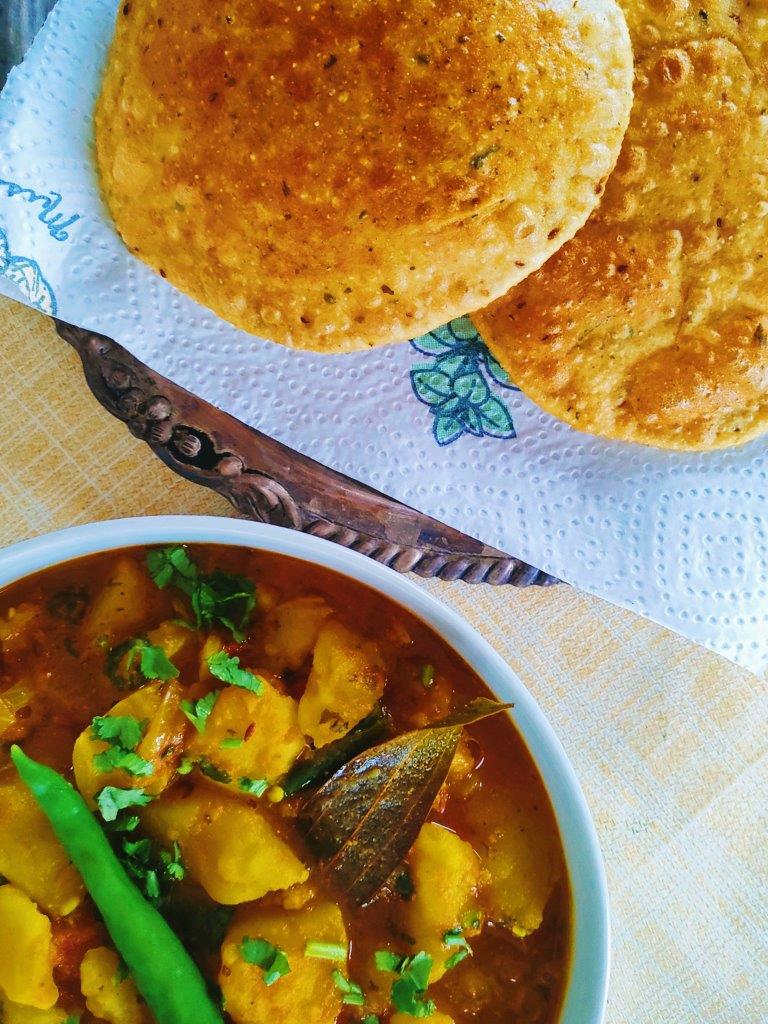
Pithi Wali Poori aur Rassedar Aalu Ki Sabzi
Weekend calls for something different, something special. During these cold winter days in Germany, what could be better than a bit of indulgence followed by a day of relaxation?
Today, I made Pithi Wali Poori with Rassedar Aalu ki Sabzi. It was an elaborate breakfast and a thoroughly satisfying one. Let me first describe what this breakfast is and its various components.
Pooris are basically deep-fried breads made with wheat flour. Different states in India have different recipes for pooris; some make it with refined flour, some with whole wheat flour and some make it with a combination of both and semolina. Other variations are plain pooris, made by combining flour with salt, oil, and kneading dough, and stuffed pooris, made by stuffing the plain poori dough with fillings made using peas, lentils, etc. Pithi wali Poori is a stuffed poori made by stuffing a spiced mixture of Urad Dal.

What goes with poori also varies from state to state in India. While some prefer pooris with potato-based gravy, others prefer it with chickpea gravy, and then there are others who eat it with a gravy made with chana dal. Other than the main ingredients, the spice mix that goes into these gravies also varies. Rassedar Aalu Ki sabzi means, a Potato Gravy dish.

Pithi Wali Poori is said to have originated in the northern state of Uttar Pradesh in India. It is usually served with a potato-based gravy and a side of chutneys and pickles. It is also commonly available as a street food in the state. Since this poori has stuffing (called Pithi) inside, it is a bit heavier than the regular plain poori. It will keep you full and satiated for a long time. This recipe is perfect for a lazy weekend breakfast or brunch.


Recently, I made Arugula Poori with Chana Dal and Pumpkin Sabzi. It tasted delicious. You can check out its recipe.

Now, let’s start with the recipe for Pithi Wali Poori with Rassedar Aalu Ki Sabzi.
Equipment Needed:
- Pan for making the gravy
- Pan for deep frying
- Mixer grinder
- Knives
- Rolling pin and board
- Mixing bowl
- Strainer
Read about all the equipment I use in my kitchen in my article: Setting Up My Indian Kitchen in Germany.
Ingredients needed to make Pithi Wali Poori with Rassedar Aalu Ki Sabzi
Ingredients for Making Pooris
Ingredients for the Dough
- 1 Cup Whole Wheat Flour
- 1 Cup Refined Flour
- ⅓ Cup Fine Semolina (Sooji)
- 1 tbsp Sunflower Oil
- 1 tbsp Carom Seeds (Ajwain)
- 1 tbsp Dry fenugreek Leaves (Kasuri Methi)
- 1 tsp Salt
- Water; for kneading
Ingredients for the Stuffing
- ¾ Cup Urad Dal (without skin); washed and soaked overnight
- 1 tbsp Fennel Seeds (Saunf)
- 1 tbsp Coriander Seeds (Sabut Dhaniya)
- 3-4 Dry Red Chillies
- ½ tsp Turmeric Powder
- ¾ tsp Salt
- 1 tsp Dry Mango Powder (Aam Chur)
- 1/4 tsp Asafoetida
Additionally
- Oil; for frying
Ingredients for making Rassedar Aalu Ki Sabzi
- 6-7 Medium-Sized Potatoes; boiled
- 1 tbsp Mustard Oil
- 2 Bay leaves
- 3-4 Cloves
- 1 tsp Cumin Seeds (Jeera)
- 2-3 Green Chillies; slit
- 1 Medium-Sized Onion; Chopped
- 2 Medium-Sized Tomatoes; pureed in a mixie
- 1-1½ tsp Salt
- 1½ tsp Kashmiri Red Chilli Powder
- 1 tbsp Coriander Powder
- ⅔ tsp Garam Masala
- 1 tbsp Dry fenugreek Leaves (Kasuri Methi)
- Water; for adjusting the consistency
- Fresh Coriander Leaves; for garnishing
Some Notes about Ingredient Sourcing in Germany:
- Whole Wheat Flour: For this recipe, it is best to buy whole grain atta from any Indian shop.
- Refined Flour: This is available in supermarkets. It is called Weizenmehl Typ 405. Read my article:
- Fine Semolina: Buy from an Indian shop, or buy Weichweizengrieß from supermarket.
- Sunflower Oil: This is available in supermarkets. It is called Sonnenblumenöl. Read my article:
- Carom Seeds: This is called Ajwain in Hindi. It is available in Indian shops.
- Dry fenugreek Leaves: This is called Kasuri Methi in Hindi. It is available in Indian shops.
- Salt: It is called Salz in German. This is available in supermarkets. Read my article: 10 Types of Salts in German Supermarkets-Explained.
- Urad Dal (without skin): Available in Indian shops. It is available in Indian shops.
- Fennel Seeds: It is called Saunf in Hindi. It is available in Indian shops.
- Coriander Seeds: It is called Sabut Dhaniya in Hindi. It is available in Indian shops.
- Dry Red Chillies: It is called Sabut Lal Mirch in Hindi. It is available in Indian shops.
- Turmeric Powder: It is called Haldi in Hindi and Kurkuma Pulver in German. It is available in Indian shops as well as supermarkets.
- Dry Mango Powder: It is called Aamchur in Hindi. It is available in Indian shops.
- Asafoetida: It is called Heeng in Hindi. It is available in Indian shops.
- Oil for deep frying: It is called Bratöl in German. It is available in supermarkets. Read my article: Different Types of Oils in German Supermarkets-Explained.
- Potatoes: Use Vorwiegend festkochende Kartoffeln for this recipe. They are Read my article: Different Types of Potatoes in German Supermarkets- Explained.
- Mustard Oil: This is easily available in Indian shop.
- Bay leaves: These are available in Indian shops. If you dont have an Indian shop near you, you can buy Lorbeerblätter from the supermarket. It is not exactly the Indian bay leaf but can be a good replacement.
- Cloves: Avaialble in Indian shops.
- Cumin Seeds: Avaialble in Indian shops and some supermarkets. It is called Kreuzkummel in German.
- Green Chillies, Fresh Coriander leaves: Available in Indian shops.
- Onion, Tomato: Available in the vegetable section of supermarkets. Called Zwiebel and Tomate respectively.
- Kashmiri Red Chilli Powder, Coriander Powder, Garam Masala: Available in Indian shop.
Method to make Pithi Wali Poori with Rassedar Aalu Ki Sabzi:
Method to Make Pithi Wali Poori:
- In a mixing bowl. combine whole wheat flour, refined flour, semolina, salt, carom seeds and kasuri methi. Mix.

- Add oil. Mix

- Add water and knead it into a semi-soft dough. Cover it and rest it for about 15 minutes.

- While the dough rests, proceed to make the stuffing.
- Wash the soaked urad dal. Drain out all the water and transfer it to a pan.

- On medium heat, cook it for about 3-4 minutes. This will remove the moisture. Remove the lentils. Keep them aside.

- In the same pan, on medium heat, roast fennel seeds, coriander seeds and dry red chillies.

- When they start releasing a lovely aroma, remove them and transfer them to a mixie.

- Grind them into a fine powder.

- To this, add urad dal and grind them all to a fine paste.

- Transfer this paste to a mixing bowl.

- Add salt, turmeric powder, asafoetida and amchur powder.

- Mix well. Knead it like a dough and keep it aside.

- Knead the rested wheat flour dough once again. Now you have everything you need to make your pooris.

- Now, heat oil in a pan. While the oil heats, roll the pooris.
- Take a portion of the dough and roll it a bit. Place a portion of the stuffing in the middle.

- Wrap the dough around it.

- Round it using your hands.

- Then, roll and flatten it using a rolling pin. If the dough sticks, brush some oil on the rolling board.

- Make all the pooris and keep them ready for frying.

- On high heat, fry the pooris till they puff and get a lovely golden colour.


Pooris are ready
Method to make Rassedar Aalu Ki Sabzi:
- Remove the peels of the boiled potatoes. Chop them roughly and keep them aside.

- Heat oil in a pan. On medium heat, fry bay leaves, cloves, cumin seeds and green chillies for about 1 minute.

- Add chopped onions. On medium heat, fry them till they change their colour.


- Add tomato paste followed by salt, turmeric powder, Kashmiri red chilli powder and coriander powder.

- Cover it and cook it on medium heat for about 5 minutes.

- Add the roughly chopped potatoes. Add about two cups of water.


- Add garam masala, coriander leaves and kasuri methi.

- Boil for about 3-4 minutes on high heat. Turn off the heat. Garnish with fresh coriander leaves and serve with the prepared pooris.

Here is the recipe in printable format:

Pithi Wali Poori with Rassedar Aalu Ki Sabzi

Equipment
- Pan for making the gravy
- Pan for deep frying
- Mixer grinder
- Knives and Chopping board
- Rolling pin and board
- Mixing bowl
Ingredients
Ingredients for Making Pooris
Ingredients for Dough
- 1 Cup Whole Wheat Flour
- 1 Cup Refined Flour
- ⅓ Cup Fine Semolina (Sooji)
- 1 tbsp Sunflower Oil
- 1 tbsp Carom Seeds (Ajwain)
- 1 tbsp Dry fenugreek Leaves (Kasuri Methi)
- 1 tsp Salt
- Water; for kneading
Ingredients for the Stuffing
- ¾ Cup Urad Dal (without skin); washed and soaked overnight
- 1 tbsp Fennel Seeds (Saunf)
- 1 tbsp Coriander Seeds (Sabut Dhaniya)
- 3-4 Dry Red Chillies
- ½ tsp Turmeric Powder
- ¾ tsp Salt
- 1 tsp Dry Mango Powder (Aam Chur)
- ¼ tsp Asafoetida
Additionally
- Oil; for frying
Ingredients for making Rassedar Aalu Ki Sabzi
- 6-7 Medium-Sized Potatoes; boiled
- 1 tbsp Mustard Oil
- 2 Bay leaves
- 3-4 Cloves
- 1 tsp Cumin Seeds (Jeera)
- 2-3 Green Chillies; slit
- 1 Medium-Sized Onion; Chopped
- 2 Medium-Sized Tomatoes; pureed in a mixie
- 1-1½ tsp Salt
- 1½ tsp Kashmiri Red Chilli Powder
- 1 tbsp Coriander Powder
- ⅔ tsp Garam Masala
- 1 tbsp Dry fenugreek Leaves (Kasuri Methi)
- Water; for adjusting the consistency
- Fresh Coriander Leaves; for garnishing
Instructions
Method to Make Pithi Wali Poori
- In a mixing bowl. combine whole wheat flour, refined flour, semolina, salt, carom seeds and kasuri methi. Mix.
- Add oil. Mix
- Add water and knead it into a semi-soft dough. Cover it and rest it for about 15 minutes.
- While the dough rests, proceed to make the stuffing.
- Wash the soaked urad dal. Drain out all the water and transfer it to a pan.
- On medium heat, cook it for about 3-4 minutes. This will remove the moisture.
- Remove the lentils. Keep them aside.
- In the same pan, on medium heat, roast fennel seeds, coriander seeds and dry red chillies.
- When they start releasing a lovely aroma, remove them and transfer them to a mixie.
- Grind them into a fine powder.
- To this, add urad dal and grind them all to a fine paste.
- Transfer this paste to a mixing bowl.
- Add salt, turmeric powder and aamchur powder. Mix well. Knead it like a dough and keep it aside.
- Now, heat oil in a pan.
- While the oil heats, roll the pooris.
- Take a portion of the dough and roll it a bit. Place a portion of the stuffing in the middle.
- Wrap the dough around it.
- Round it using your hands.
- Then, roll and flatten it using a rolling pin. If the dough sticks, brush some oil on the rolling board.
- Make all the pooris and keep them ready for frying.
- On high heat, fry the pooris till they puff and get a lovely golden colour.
Method to make Rassedar Aalu Ki Sabzi
- Remove the peels of the boiled potatoes. Chop them roughly and keep them aside.
- Heat oil in a pan. On medium heat, fry bay leaves, cloves, cumin seeds and green chillies for about 1 minute.
- Add chopped onions. On medium heat, fry them till they change their colour.
- Add tomato paste followed by salt, turmeric powder, kashmiri red chilli powder and coriander powder.
- Cover it cook it on medium heat for about 5 minutes.
- Add the roughly chopped potatoes. Add about two cups of water.
- Add garam masala, coriander leaves and kasuri methi.
- Boil for about 3-4 minutes on high heat. Turn off the heat.
- Garnish with fresh coriander leaves and serve with the prepared pooris.
Please note that this article contains affiliate links. If you buy using these links, I receive a small commission. This has no effect on the price for you.
Follow me on:


Leave a Reply