
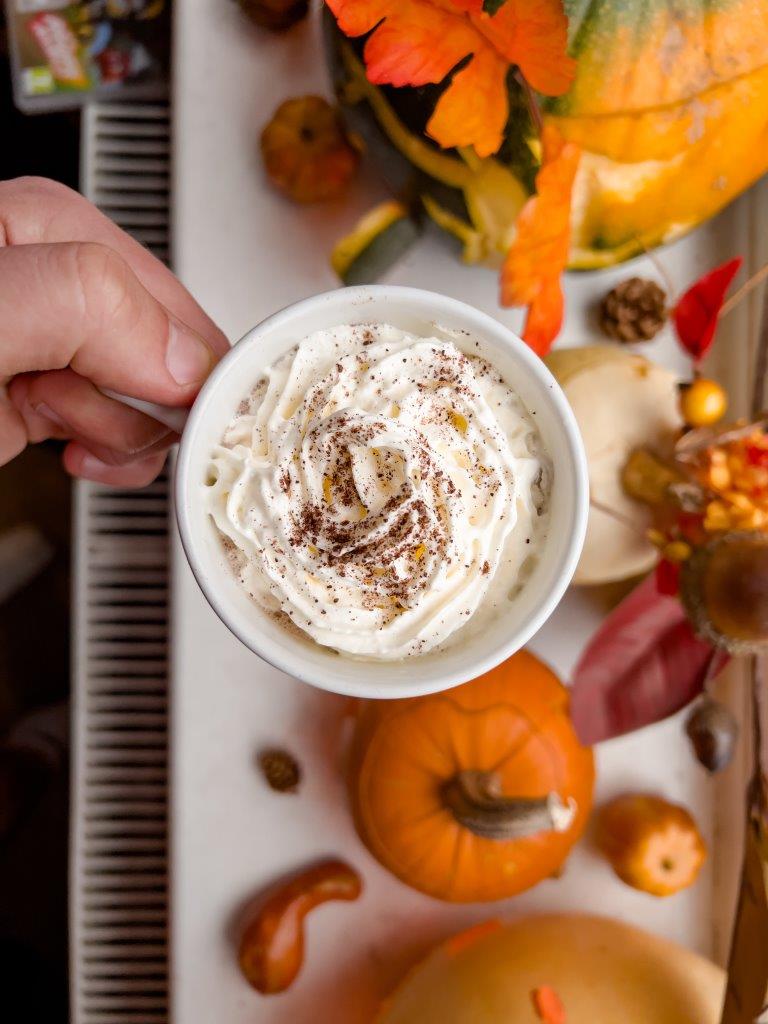
Photo by Dan Smedley on Unsplash
Cream-based products in German Supermarkets
The refrigerator section of supermarkets in Germany is filled with various products. Sometimes, it isn’t very clear what each product means.
Besides products like milk, butter, and yoghurt, cream occupies significant space on supermarket shelves. I am talking about edible creams such as sour cream, whipping cream, etc. Like any other product, it comes in many varieties.
Cream ( called Rahm in German) is known by different names in different parts of Germany and German-speaking countries. Some of the commonly used names are Sahne, Obers and Nidel. Also note that, for anything to be labelled as cream, it should have a minimum fat content of 10%.
Before getting to the product details, let us understand a few topics.
- What is cream, and how is it made?
- Usage of cream.
- Types of creams.
How is cream made?
How is cream made at home?
Many of us might have noticed that when we boil milk ( which is not homogenized) and allow it to cool, a fat layer forms on the surface and floats on top. When kept in the fridge, this layer thickens and can be easily separated from milk. This layer of fat is called cream.
To understand how exactly the above-mentioned process is carried out at home, read my article on Ghee, in which I explain the process of extracting cream from milk in detail with pictures.
To understand more about milk, read my article about milk in German supermarkets. In it, I explain some important terminologies, like pasteurization and homogenization, and also cover product information.
How is cream made on a commercial level?
In factories, a process called centrifugation is used, in which milk fat (cream) is separated as much as possible. What remains is skimmed milk ( called Magermilch in German), which has a fat content of 0.03% to 0.06%. Then, based on the product to be made, the extracted cream and milk are mixed back in the desired proportions to achieve the required fat content.
Usage of Cream:
Apart from knowing how cream is made, it is also essential to know how its fat content influences its usage. So, let’s understand that.
The higher the fat content of the cream, the better it is for use at high temperatures. Low-fat cream flocculates at high temperatures, and high-fat cream doesn’t.
Let us say you are making a soup, and you add low-fat cream to it ( to either enhance the taste or thicken the soup) and cook it on high heat; it will flocculate, i.e. the cream globules will come together and form clumps.
So, if you desire to cook the cream at a high temperature, use high-fat cream. For medium hot/room temperature usage, you can use low-fat cream. I will share more details below.
Types of Cream
Cream comes in two types—sour and sweet ( read not sour). Sour cream is made by adding lactic acid bacteria to the cream, giving it a sour taste. Sweet cream (it is actually not sweet. It is just NOT sour) is unprocessed.
Examples of the former are Sauresahne, Schmand, and Crème Fraîche. Examples of the latter are Schlagsahne, Crème double, and Kaffeesahne ( All explained in detail below)
In addition to these two types, cream-like products like Kochsahne, an emulsion of milk and oil, are also available in supermarkets.
Now, let us understand the different products that fall under the category of cream:
Cream-based products in German Supermarkets:
Please note that the product pictures are taken from the internet and are only for reference. These are not product recommendations.
- Sauresahne:

This is sour cream, and, as the name says, it has a sour taste, which is achieved by adding lactic acid-producing bacteria to dairy cream. This results in a slightly tart and thick substance. Sauresahne has a fat content of 10% ( which is low), which means it can’t stand high heat. Therefore, it should be either added at the end of the cooking process or used at warm/room temperature, for example, in dips, frosting, garnishing (for example, baked potatoes) or as a spread. However, it does stand up well in baked goods like biscuits, cakes, etc. ( when added in small quantities) and enhances the flavour and texture. - Schmand:

Schmand is the same as sour cream ( Sauresahne) but has a 20% fat content. Like sour cream, it can be used in desserts and cakes. - Crème Fraîche

Crème Fraîche is the French version of sour cream but with 30% fat. It has a slightly sour taste, just like Sauresahne and Schmand, but due to its high fat content, it is suitable for high-temperature cooking, such as thickening sauces or adding richness to gravies. - Schlagsahne

Schlagsahne is whipping cream. This cream becomes firm on whipping. We commonly see whipped cream as an accompaniment for ice creams, waffles, coffee, hot chocolate, and cake frosting. Whipped cream is sweet cream – i.e. cream without added lactic acid bacteria. It contains at least 30% fat ( which is a high fat content), which makes it well-suited for cooking. However, this cream can curdle if you cook it with something acidic, e.g., with lemon and other citrus fruits. - Crème double

Cream with a fat content of at least 40 % is called crème double. Double crème is ideal for refining soups and sauces and, because of its high fat content, is also suitable for high-heat cooking. It is thick and spoonable. - Kaffeesahne

Coffee cream is a product made from sweet cream. Its fat content is between 10 and 15%. In texture, it looks like thick milk. It can be added to your coffee to cream it. - Kochsahne

This translates to cream used for cooking. Unlike all the varieties mentioned above, it is not a 100% dairy product. It comprises milk and oil and has a fat content of about 18%. This is a good alternative to whipping cream for high-heat cooking, as it doesn’t flocculate ( because of the presence of oil) and is also low in fat. It can be used for refining soups, thickening sauces, etc.
In addition, products such as Sprühsahne (which translates to spray cream) are also available. This is whipping cream mixed with sugar, thickening agents, etc. It can be directly ‘sprayed’ on waffles, pancakes, etc.
Apart from that, lactose-free cream products are also available. You will see the word Laktosefrei on the packaging for such products. To understand how lactose-free milk products are made, read my article about milk.
To learn more about other products in German supermarkets, click here.
If you liked this content, please consider subscribing.
Follow me on:


Leave a Reply