
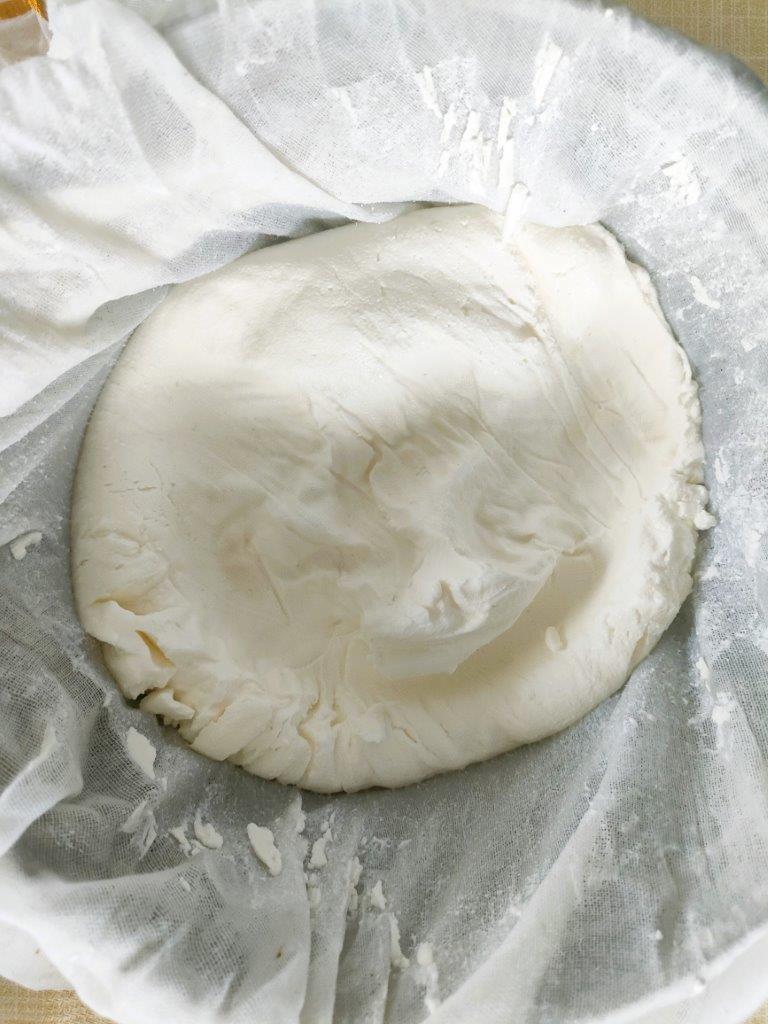
How to make Hung Curd at Home
Hung Curd or Yogurt is curd/yoghurt with very little water content. When we buy yoghurt/curd or make it at home, it naturally has a good amount of water content. When passed through a cloth ( ideally a muslin cloth), the liquid and semi-solid parts separate. The semi-solid part is called hung curd/yoghurt, and the liquid part is called whey.

After the two parts are separated, they can be used in the desired recipes. For example, hung curd/yoghurt can be used to make hung curd sandwiches, dahi kababs, sreekhand etc., and whey can be used for kneading flour or adding to curries, or you can even water plants with it.
Hung Curd/Yogurt is rich in protein and a great addition to everyday meals. The good news is that making hung curd/yoghurt at home is quite easy and can be accomplished in a few easy steps. All you need is some basic kitchen equipment and some planning.
So, let’s see how hung curd is made:
Equipment Needed:
- Bowl
- Sieve
- Muslin Cloth/ Cheese Cloth
- Any heavy weight ( I used the mortar)
Ingredients Needed to make about 500 gm of Hung Curd/Yoghurt
- 1 lt Yoghurt: Using yoghurt with more than 3.5% Fat is ideal.
Method to make Hung Curd/Yoghurt:
- Take a bowl.

- Place a sieve, whose diameter is the same as that of the bowl, on the bowl so that it rests on it.

- Spread a muslin cloth on a sieve.

- Pour yoghurt onto the muslin cloth. Slowly, the excess water in the yoghurt will pass through the muslin cloth and the sieve and collect in the bowl.

- Tie a knot and hang the cloth so all the excess water drains out and collects in the bowl below. Leave it like that for an hour.

- You will notice water dripping through the pores of the muslin cloth.

- Then, place the knotted cloth on the sieve and rest the sieve on a bowl (same as described in the initial steps). Keep a heavy weight on the cloth and keep the setup in the fridge for 8-10 hours. This way, all the excess water that drips from the curd/yoghurt will collect in the bowl.

- After 8-10 hours, remove the weight and open the knot. Inside, you will find thick, creamy hung curd/yoghurt.

- Transfer it to a bowl with a lid. Cover and keep it in the fridge till further use.

Note: The water collected in the bowl is whey. You can use it instead of water for kneading bread/roti dough, add it to curries, or water your garden plants.
Here is the method in printable format:

How to make Hung Curd at Home

Equipment
- Bowl
- Sieve
- Muslin Cloth
Ingredients
- 1 Lt Yoghurt (with at least 3.5% fat)
Instructions
Method to make Hung Curd
- Take a bowl.
- Place a sieve, whose diameter is the same as that of the bowl, on the bowl so that it rests on it.
- Spread a muslin cloth on a sieve.
- Pour yoghurt onto the muslin cloth. Slowly, the excess water in the yoghurt will pass through the muslin cloth and the sieve and collect in the bowl.
- Tie a knot and hang the cloth so all the excess water drains out and collects in the bowl below. Leave it like that for an hour.
- You will notice water dripping through the pores of the muslin cloth.
- Then, place the knotted cloth on the sieve and rest the sieve on a bowl. Keep a heavy weight on the cloth and keep the setup in the fridge for 8-10 hours. This way, all the excess water that drips from the curd/yoghurt will collect in the bowl.
- After 8-10 hours, remove the weight and open the knot. Inside, you will find thick, creamy hung curd/yoghurt.
- Transfer it to a bowl with a lid. Cover and keep it in the fridge till further use.
To learn more, check out my How to Page.
Please note that this article contains affiliate links. If you buy using these links, I receive a small commission. This has no effect on the price for you.
Follow me on:


Leave a Reply