
Growing Beetroot in Germany: Tips for Successful Terrace Gardening
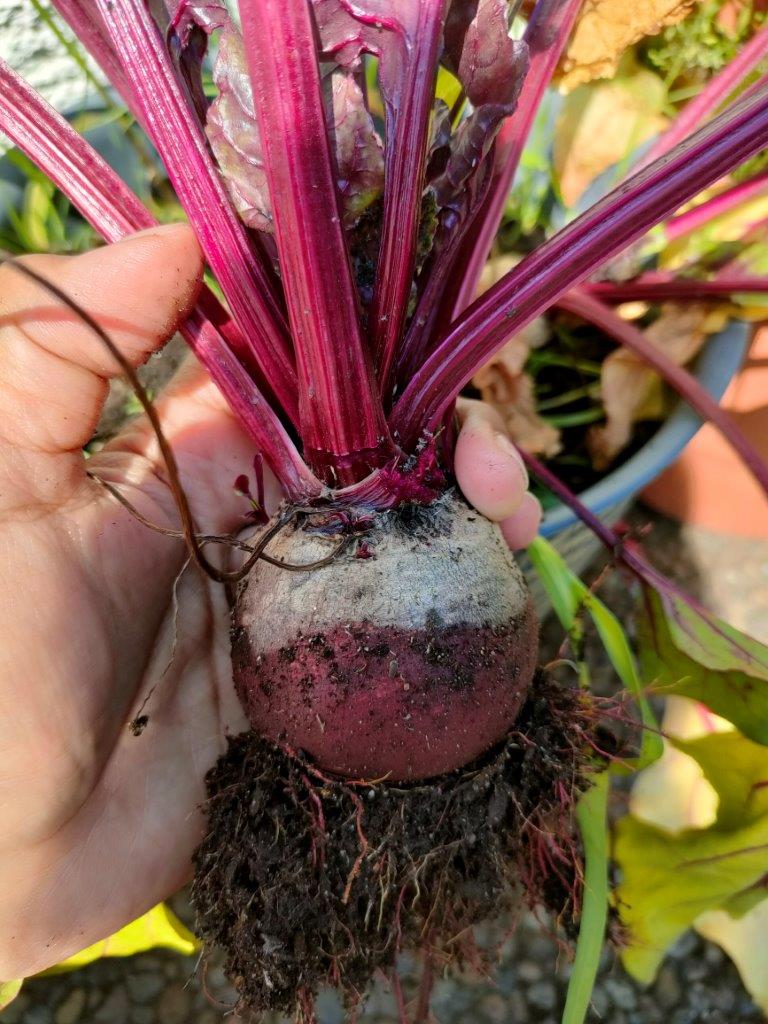
This year, I successfully harvested red beets, called beetroots, from my terrace garden in Germany.
This article is about growing beetroot in Germany. It provides everything you need to make a successful harvest, from sowing the seeds to soil and temperature considerations, leading to a bountiful harvest.
About Beetroot Seeds and Sourcing them in Germany:
Beetroot seeds are easily available in Germany. Shops like Müller, Rossmann, Bauhaus, etc., start selling seeds in early February. You can also buy these seeds from Amazon.de. These are called Rote Rüben and Rote Bete in German. It comes in a packing that looks like this:

The seeds look like this:

Sowing the seeds
In Germany, mid-February is the perfect time to sow seeds. Around this time, the day temperature is still in single digits, and the night temperature can fall below zero. But February is close to the end of winter (the end of March) and the beginning of spring (the spring months being April, May and June), so it is a perfect time to sow the seeds. For this, you need:
- Beetroot seeds
- Potting Soil
- Propagation Set
- Bottle to water the plants
Let me talk about each of these in detail:
- Beetroot Seeds: I have already discussed this above.
- Potting Soil: Potting soil is called Anzuchterde in German. This is available in Graden shops and Amazon.de. This soil is ideal for germination. You don’t need to add anything else.

If you already have soil from the previous year ( which may have lost some of its nutrients), combine it with manure and coco peat in a 1:1:1 ratio and use it as potting soil. Follow the instructions on the coco peat packaging. Typically, it needs to be combined with water so that it loosens. Then, it is ready to use.

Here are more details about the products:
Potting Soil (called Anzuchterde)
Manure (called Dünger)
Coco Peat (called Kokoserde)
You can also buy Manure and Coco Peet at much cheaper prices from discounted shops like Aktion.
In my case, I combined the previous year’s soil with manure and coco peat, which I bought from Aktion. - Propagation Set: This consists of seedling starter trays with a lid that has an air vent. The tray has a drain hole that allows proper water drainage. It also comes with tools and labels that are useful for sowing and identifying the saplings (if you have multiple varieties) as they grow. It looks like this:

These propagation sets can be found in shops like Bauhaus, Hornbach, etc. Alternatively, they can be bought from Amazon.de. More basic and cheaper versions are available in supermarkets like Aldi and Edeka. They usually don’t come with a vent and holes on the seedling trays. You can buy them too. But before you use them, make holes in each cavity so that water drains properly. You can use them without the lid ( if they don’t have a vent). - Bottle for watering the plants: You can take any bottle to water the plants. I repurposed my Sriracha bottle :).

Once you have all the required material in place, fill the cavities of the starter tray with potting soil, place 2-3 seeds in each cavity, cover it with soil, sprinkle some water and keep it indoors near the window so that the plant stays warm and gets enough daylight. Since the sowing is done in February, which is still winter, the outside temperature is low, so the seeds need to be kept indoors to germinate and turn into saplings.
My Experience of Growing beets in my terrace garden in Germany:
As mentioned above, I sowed the seeds on the 20th of Feb. I kept them indoors near the window sill and watered them with about 2 tbsp of water (in each cavity) every day.
In about a month, the seeds grew up to 2-3 inches in height. The picture below shows the growth on the 20th of March.

In another month, the saplings grew even more and looked like this. This picture was taken on April 30th.

On 1st May, I transferred the saplings to pots. Around the beginning of May, the day temperature in my city was already above 20 degrees C, and the night temperature was in single digits.
The saplings looked like this on the 1st of May:

I took pots that were at least 30 cm deep, drilled holes at the bottom to ensure good drainage and filled them with soil. This time, I used Universalerde. If you already have soil, combine it with manure and cocopeat in a 1:1:1 ratio and fill the pots with this mix.
With my fingers, I made a small cavity in the soil (in the pot). I gently removed the saplings from the seedling tray (along with the soil) and transferred them to pots, placing 2-3 saplings in each cavity. I ‘set’ it with some more soil
I potted about 3 saplings in each pot and kept the pots out in the open.

You can also buy pots and soil from supermarkets like Aldi and Kaufland. Shops like Aktion, Tedi and Woolworth also sell pots are pretty low prices.
From 1st May, I moderately watered the pots daily. I skipped watering them when it rained.
I watered the plants with water and liquid fertilizer once a week. I followed the instructions on the bottle and combined the water and fertilizer in the specified ratio.

Around the end of May, the plants looked like this. As you can see, the plants had grown well and reached a height of about 30 cm.

Around the first week of June, the beets started showing up.

Around the 24th of June, I made my first harvest.

At this time, the beets were a little smaller than the size of a cricket ball. Therefore, I allowed the beets in the rest of the pots to grow a bit more.
I washed the harvested beets and separated the leaves.


I made Beetroot leaves Patra and Beetroot Poriyal with my first harvest 🙂


I am posting this article on the 26th of June. I shall soon make my second harvest and share my experience in this article. So, watch this space for more.
Note that this article contains affiliate links. If you buy anything using these links, I receive a small commission. It doesn’t have any impact on your prices.


Leave a Reply