
Grube Messel: A UNESCO Heritage Fossil Site near Darmstadt,Germany
Today, I am writing about Germany’s first natural site included in the UNESCO World Natural Heritage List: the Grube Messel ( the Messel Pit fossil site). In 1995, this site became the first of three natural heritage sites in Germany (the other two being the Wadden Sea and the Beech tree forests that spread across 18 countries in Europe).

So far, more than 10,000 fossils from the Eocene period (48 million years ago) have been recovered from the Maar Lake, located at the site, and around 3,000 new finds are added every year. ( A maar is a volcanic crater caused by an eruption when groundwater comes in contact with hot lava or magma. When filled with water to form a shallow lake, the maar is called a Maar Lake).

Luckily for the residents of Darmstadt, this place is not too far away. Located just about 10 km from the city centre, it holds a treasure of information for history and science lovers.
A brief history of how it came to be recognized as a natural heritage site may interest my readers.
The Story behind Grube Messel
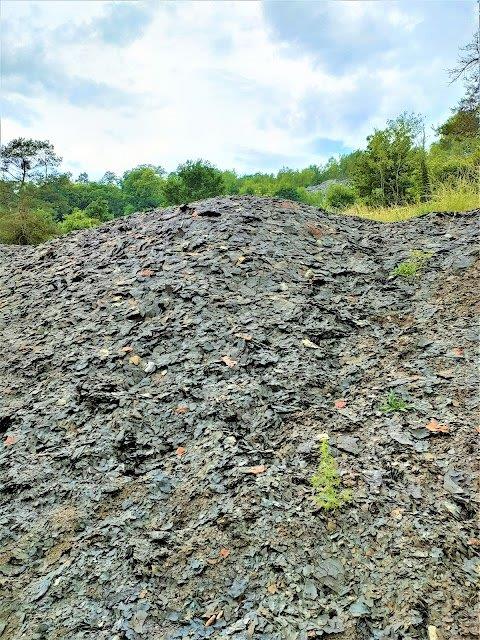
This place was first identified as a site that contained vast oil shale deposits. This led to the setting up of a factory to extract crude oil by smouldering the oil shale. During this time, fossils of animals were found here. But it was only when mining became uneconomical (due to the fall in oil prices), leading to the shutting down of the factory, that amateur collectors started visiting the site and collecting fossils. They used techniques to preserve the fossils used to this date. Later, this site became home to a cement factory, which was then identified as a garbage dump. Thanks to public resistance, the site got its spot among the Natural heritage sites in the world due to the sheer number of fossils found on this site.
Today, the Senkenberg Institute preserves the Messel pit, conducts excavations at the site, and preserves the finds.

The early finds of fossils of crocodiles at the site, followed by those of various other plant and animal species, led to a great understanding of the past. It helped explain the evolution of plants and animals and the development and changes that happened on the earth as time progressed. The site boasts finds of animal skin, plants, feathers, and even stomach contents of animals that have been preserved for future studies.


Here are some of the experiences for visitors at Grube Messel:
1. Tour the pit area:
You can hike in the pit area (called Grubenwanderung in German) for two hours, go on a short tour (called Schnuppertour) for one hour, or take the Grabungsimpressionen program for a more detailed program to understand fossils and how they are found.
2. Children can also enrol in a themed workshop (Geowerkstatt):
These can be booked using this link.
These programs are conducted by professionals who explain everything about the fossil site. The tour format is informal and interactive. It is informative, educative, and interesting.
Note that access to the pit area is only possible with a guide. Hence, booking one of the tours mentioned above is necessary to access the fossil site.


However, if you don’t want to book a tour but still want to see how the site looks, there is a viewing platform that can be reached by climbing up a ramp.

3. Visit the museum:
The museum showcases the site’s finds and also explains evolution and how it can be understood using these finds.


On a side note: There is also a permanent exhibition at the Landesmuseum in Darmstadt, where the finds from the Messel site have been exhibited. More details can be found here.
4. In addition, there are activities for children under 12 years of age
These activities are themed around nature, evolution, stories around the forest, and the fossil site. These include:
Solving puzzles: Details can be found here.
Drawing painting activities: Details can be found here.
5. Internship and Gap Year
One can also do a two-month internship or spend a gap year at Grube Messel. Learn more here.
There is a small restaurant and a shop where souvenirs, books, etc., can be purchased.

The Grube Messel is an excellent place of learning for old and young alike. Along with offering a fascinating insight into the story of our evolution, it gives a good understanding of the work and scientific methods used by geologists and scientists in unravelling the mysteries of our past.


Click here to learn more about places and experiences in and around Darmstadt.
Subscribe to my newsletter to receive my posts directly in your mailbox.


Leave a Reply